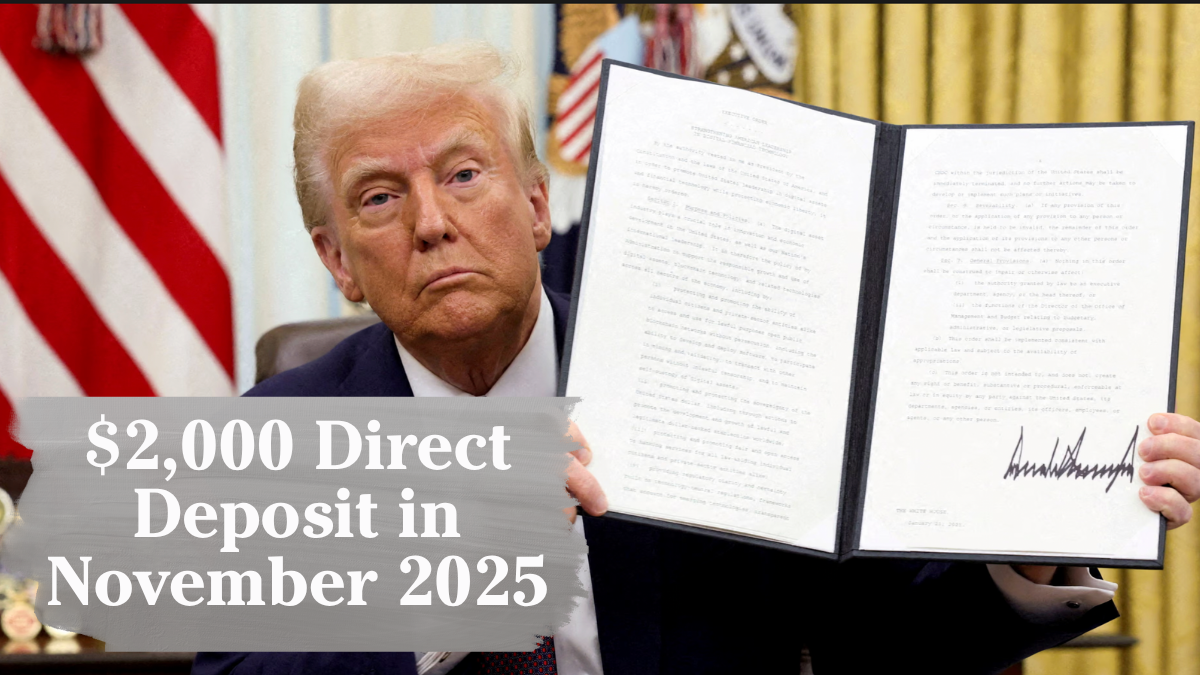
President Donald Trump’s proposal to give every american $2,000 tariff dividend checks to be funded by tariffs collected from other countries has become one of the most closely watched policy ideas of the 2025 political and economic landscape. proposed to bring relief directly to U.S. households, the initiative has ignited passionate commentary from supporters and skeptics alike, with questions swirling about its feasibility, fiscal impact, and timing.
The Origins of the Tariff Dividend Proposal
Trump’s notion of using tariff revenues to support direct cash payments is rooted in his broader “America First” trade policies. During his tenure, Trump has ramped up tariffs on imported goods, arguing these measures protect U.S. industries, pressure foreign governments, and—critically—generate new revenue streams. In November 2025, he escalated this rhetoric by promising a $2,000 payment to “middle and moderate income Americans” sourced directly from these tariffs, excluding high-income earners. The plan, according to Trump, would leverage what he claims are “hundreds of billions” in annual tariff collections.
Who Would Get the Dividend Checks?
The eligibility criteria for these checks remain somewhat ambiguous. Trump has consistently said the payments would go to “moderate and middle income” Americans, though neither the administration nor accompanying legislative drafts have defined income thresholds publicly. If the structure mirrors past COVID-era stimulus payouts, most analysts predict the cutoff could rest at about $100,000 in annual income for individuals and $150,000 for couples. That would make roughly 150 million Americans eligible, at a taxpayer cost of about $300 billion if single checks are issued, or far more if the format expands to include dependents or is repeated annually.
The Numbers—and the Doubts
Despite the rhetoric, numerous analysts have challenged the underlying math. Treasury Department figures show that total tariff revenue for the 2025 fiscal year stood about $195 billion—almost $100 billion short of the cost to send out a single round of $2,000 dividend checks to Americans under the $100,000 income threshold. If the administration decided to follow the more expansive model, distributing checks not only to tax filers but also their dependents, the cost could soar toward $600 billion.
As Erica York of the Tax Foundation put it, “the White House is promising a dividend far larger than the revenue it actually collects”. In effect, critics argue, the checks would be deficit-financed, increasing the federal debt, which already exceeds $38 trillion.
Legal and Legislative Hurdles
Beyond the fiscal math, significant legal hurdles loom. While Trump and his economic advisers have championed the proposal in public, both Treasury Secretary Scott Bessent and the deputy White House chief of staff have suggested that authorizing such outlays would require Congressional approval. Under the appropriations clause of the U.S. Constitution, only Congress can approve large-scale expenditures from federal revenue.
Furthermore, much of the revenue in question might already be earmarked to offset other components of Trump’s sweeping tax reform package, passed earlier in 2025, complicating any attempt to “spend the same dollar twice”.
Proposed Timeline: When Might the Checks Arrive?
Despite these complications, Trump has stated that, were the program to advance, checks could go out “prior to … probably the middle of next year” (meaning mid-2026), or “a little bit later than that”. Administration officials echo that much depends upon Congressional action and negotiations. The lack of concrete legislative language or bipartisan support for the actual disbursement structure means that mid-2026 remains the soonest, and possibly optimistic, target for any such checks.
Political and Economic Arguments
The proposal’s appeal is political as much as economic. After competitive elections and amid frustration over inflation and living costs, Trump and the GOP have sought to rebrand tariffs, pitching them as tools for “affordability,” not just protectionism. On social media and campaign stops, Trump touts record stock market highs and expanding U.S. manufacturing, presenting the $2,000 check as a populist “dividend” on collective national strength.
However, most mainstream economists caution that tariffs are, at best, an indirect and problematic means of generating public assistance. Tariffs can feed into higher consumer prices, reduce the purchasing power of wage earners, and are ultimately paid by American importers—and, by extension, consumers.
Criticism and Skepticism
Critics from across the spectrum have labeled the plan a “fiscal fantasy” and a “deficit-financed giveaway”. They point out that not only is the revenue base insufficient for one-time checks, but the misunderstanding of how tariffs impact both economic growth and consumer costs undercuts the plan’s effectiveness as anti-inflationary policy. Moreover, with the U.S. government projected to run a $1.8 trillion deficit this year alone, and the federal debt already at record highs, the prospect of borrowing still more to fund the checks is politically controversial even among some Republicans.
The Road Ahead: Will This Become Law?
As of late November 2025, the $2,000 tariff dividend proposal remains just that—a proposal with uncertain legislative prospects. For it to move forward, Congress would not only need to pass enabling legislatio