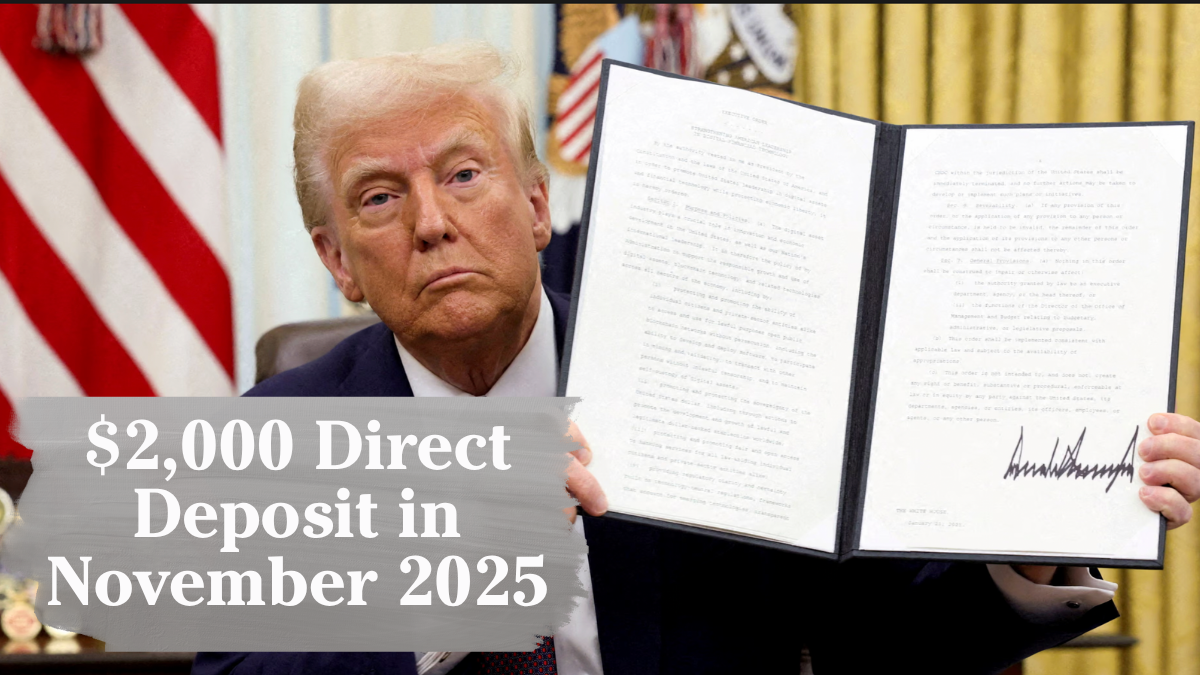
Trump’s proposed $2,000 “IRS tariff dividend” which is supposed to be funded by tariffs collected from other countries is a widely discussed economic measure, with direct comments from Treasury Secretary Scott Bessent. While there are lot of rumours going around when the dividend be given out and to whom, below is the most accurate and probable we see.
$2,000 IRS Tariff Dividends: Policy Overview
The “IRS tariff dividend” refers to a $2,000 per-person payment proposed by President Donald Trump, intended to be funded by revenues collected from tariffs on foreign goods. The idea is framed as an economic dividend, returning the proceeds of tariffs directly to American households during a time of persistent inflation and economic uncertainty.
Official Statements and Current Status
Treasury Secretary Scott Bessent has publicly confirmed the President’s intention for these tariff dividends. According to Bessent, the payments could come as direct checks or tax reductions, but Congressional approval is required before implementation. In multiple interviews, Bessent emphasized that the White House is exploring various ways to deliver on the dividend promise, with the primary goal of providing relief to middle- and lower-income Americans hardest hit by economic challenges.
The President has formally announced the plan and has signed executive orders related to tariffs, but the dividends themselves remain contingent on legislation passing Congress. Until official approval is secured, no payout timetable is available.
Potential Impact and Eligibility
The administration has indicated that eligibility for the tariff dividend would likely mirror earlier stimulus payments, targeting:
- Individuals earning under $100,000
- Households with children or dependents
- Recipients of Social Security and other federal benefits
- Exclusion of the highest income earners to focus relief on working- and middle-class families
If Congress enacts the necessary legislation, these checks would represent a significant financial infusion for millions of American families.
Congressional and Economic Considerations
Lawmakers remain split on the proposal. Advocates argue that tariff revenues should be used to offset the higher costs facing ordinary Americans, while critics question the long-term economic impact and potential trade repercussions. Any payout of the $2,000 tariff dividend will require bipartisan support and clear legislative action, which is now the focus of debate in Washington.
Summary Table: Key Facts
| Aspect | Details |
|---|---|
| Policy Name | $2,000 IRS Tariff Dividend |
| Funding Source | U.S. tariff revenues from foreign imports |
| Proponents | President Trump, Treasury Secretary Scott Bessent |
| Status | Proposed, awaiting Congressional approval |
| Eligibility | Most Americans under $100,000 income; some exclusions |
| Payment Format | Direct deposit, checks, or potential tax reductions |
| Next Steps | Congressional vote and legislative passage required |
Proposed Date of Payouts
Based on recent official statements and credible media reports, the earliest likely date for the $2,000 IRS tariff dividend checks to reach Americans would be around the middle of 2026. President Trump has publicly stated that his administration expects to begin issuing these payments “probably the middle of next year, a little bit later than that,” referencing summer or later in 2026 as the target period. However, this prediction depends entirely on Congressional approval and the resolution of legal and budgetary hurdles, meaning delays are possible if legislative or legal challenges slow the process.
Treasury Secretary Scott Bessent has further clarified that actual checks or equivalent forms of relief cannot be distributed without new laws being passed by Congress, which introduces additional uncertainty to the timeline. Analysts also highlight that while the President is committed to this policy, funding and eligibility details must be fully defined in legislation before any payments go out. Given these steps and the current status of the proposal, middle to late 2026 is the best estimate for when Americans might see $2,000 tariff dividend payments, but this remains subject to developments in Washington and final passage of required bills
Conclusion
The $2,000 IRS tariff dividend is a major policy proposal designed to share tariff revenues with the American public. As of November 2025, the plan is officially endorsed by the executive branch, but relies on Congressional action before any payments can be issued. The public should continue monitoring trusted government announcements for further developments in this evolving economic policy.